
Loading...
Serving Sunrise, FL and surrounding areas. (754) 294-7370
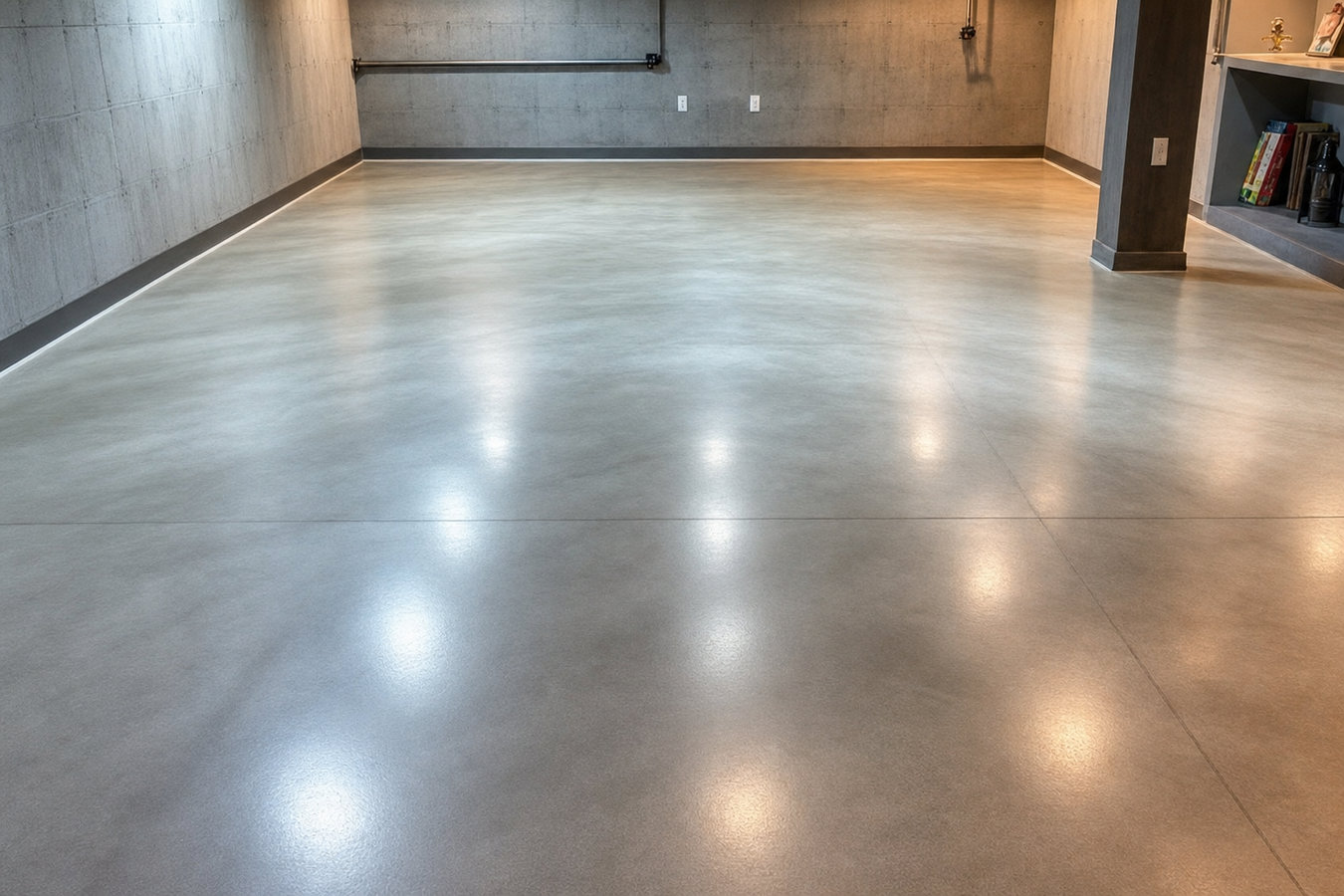
Peeling coatings and damp slabs are common in Sunrise homes. We test for moisture first, fix what is wrong, and apply a finish that holds up to Broward County heat and humidity for the long haul.
Basement flooring in Sunrise, FL refers to concrete slab floors in lower-level rooms, utility spaces, enclosed garages, and bonus rooms that need the same durable, moisture-resistant treatment a traditional basement would require - most straightforward coating jobs take one to two working days from prep to finish.
Most Sunrise homes do not have a traditional basement - the water table in Broward County sits too close to the surface for deep excavation to make sense. What homeowners do have are concrete slab floors in garages, patios, bonus rooms, and utility spaces that see the same moisture, heat, and daily use that a basement floor faces elsewhere. The challenge here is not depth - it is moisture management. A bare or poorly coated slab in Sunrise absorbs everything: spills, humidity pushing up from below, and the chalky mineral deposits that appear when water moves through porous concrete.
Before any coating or overlay goes down, we assess the slab and test for moisture. If prep work is needed first, our concrete grinding and surface preparation service handles that as a standalone step so the finish has a solid foundation to bond to.
A white, powdery residue appearing on your concrete floor - especially after rain or humid stretches - is a sign moisture is moving up through the slab. In Sunrise, where the water table is high and rainfall is heavy, this is a very common problem. It means the concrete is actively pushing moisture out, and any flooring put on top without addressing it first will likely fail within a year.
If your floor has an older paint or coating that is lifting away from the surface in patches, the bond has broken down - usually because of moisture underneath or because the original prep work was rushed. In South Florida's climate, this tends to happen faster than in drier parts of the country. A new coat applied over a failing one will fail just as quickly; the old material needs to come off first.
A persistent musty or earthy odor in a lower-level room, utility space, or enclosed garage is often the first sign of moisture or mold developing beneath or within the floor. Sunrise's humidity means even a small amount of trapped moisture can create conditions where mold grows quickly. If the smell is coming from the floor rather than walls or ceiling, the slab itself may be the source.
If you are avoiding a room or using it only for storage because the floor looks rough, stained, or damaged, that is a practical sign it is time for an upgrade. Many Sunrise homeowners have enclosed patios, bonus rooms, or garages that could function as real living or working space with the right flooring. A finished, clean floor is often the single change that makes a space feel like part of the home.
Not all coatings perform the same in South Florida. Standard epoxy works well in cooler, drier climates, but in Sunrise it can yellow, soften, or lose adhesion faster than it would elsewhere. For this reason, we typically recommend polyurea or polyaspartic systems for exterior-adjacent spaces, garages, and rooms that see UV exposure - they cure faster, resist UV degradation, and hold up better in persistent humidity. For interior utility rooms without direct sun exposure, a properly applied epoxy system is still a strong, cost-effective option when installed over a well-prepared slab.
Decorative finishes like color flake broadcasts add texture and grip alongside the durability, making spaces feel finished rather than industrial. If you want a floor that is sealed and protected but does not need a coating, our concrete sealing service provides a penetrating barrier that blocks moisture and staining without changing the floor's appearance significantly.
Built for South Florida UV and humidity - these outperform standard epoxy in warm, wet climates and are the default recommendation for Sunrise homes.
A cost-effective solution for interior concrete spaces where UV exposure is limited and a hard, sealed surface is the primary goal.
Colored chips broadcast into the coating add texture, grip, and a finished appearance that makes utility spaces feel like livable rooms.
Sunrise averages over 75 inches of rainfall per year and rarely sees temperatures drop below 60 degrees, even in winter. That constant warmth and moisture affects concrete in ways that homeowners in drier states never have to think about. The water table in Broward County sits very close to the surface, which means moisture is constantly pushing up through concrete slabs - even in homes that look and feel completely dry from the inside. Older homes in Sunrise, many of them built between the 1970s and 1990s, may have slabs that have shifted slightly or absorbed years of moisture, making surface prep a more involved step than it would be on a newer, tighter slab. Homeowners in Tamarac and surrounding communities deal with the same conditions.
Hurricane season also plays a role. Broward County sits squarely in Florida's storm corridor, and water intrusion after a significant storm is one of the most common reasons Sunrise homeowners need new flooring. After flooding, the slab needs to dry out completely before any coating goes on - which can take weeks in South Florida's humidity - and white chalky mineral deposits that appear on the surface need to be ground off as part of prep. Getting your floor done in the spring, before the June-through-November storm season, means you are protected heading into the riskiest months. Homeowners in Coral Springs and other nearby cities face the same seasonal planning decisions.
Reach out by phone or form and we get back to you within 1 business day. We will ask a few basic questions about the space, what is currently on the floor, and what you want to use the room for.
We visit to check slab condition - cracks, staining, moisture signs, and level. In Sunrise, we always test for moisture coming up through the concrete. You get a written quote before any work begins, not a verbal estimate.
We grind the entire surface to open up the concrete and give the coating a solid grip. Cracks get filled, and if moisture is present, a barrier product goes down first. This step typically takes the better part of a day.
The coating goes on in stages - base, decorative layer, and clear topcoat. Before we leave, we walk through the finished space with you and explain exactly how long to stay off it and what to avoid in the first few weeks.
We come out in person, test the slab, and give you a written price before any work starts - no obligation and no surprise charges.
(754) 294-7370Broward County's high water table is the number one reason floor coatings fail in Sunrise. We test the slab for moisture on every project before we apply a single coat. If a contractor you are speaking with does not mention moisture testing, that is the most important question you can ask them.
We use polyurea and polyaspartic systems specifically suited to high-humidity, high-UV environments - not the standard epoxy that works fine in Ohio but yellows and softens in Sunrise. Choosing the right product for this climate is the difference between a floor that lasts five years and one that lasts twenty.
We hold a current Florida state contractor license through the Florida Department of Business and Professional Regulation, which you can verify yourself in under a minute online. We also carry full liability and workers' compensation insurance - ask for proof of both before hiring any contractor.
Before we start, you get a written breakdown of exactly what the slab needs and what the total cost will be - no verbal agreements, no vague line items, no last-minute add-ons. The number you agree to at the start is the number you pay at the end.
Doing concrete floor work correctly in South Florida is not the same as doing it correctly anywhere else. The moisture realities of Broward County demand a moisture-first approach, the right products for this climate, and a contractor who has actually worked on Sunrise slabs before - not one who learned the trade somewhere drier and is applying the same habits here.
The American Concrete Institute publishes industry standards for surface preparation and moisture management in concrete flooring - the technical foundation that separates a job that lasts from one that fails. The South Florida Water Management District provides regional data on Broward County water table and drainage conditions that inform how we approach every slab we work on.
Proper grinding and surface prep is what makes any floor coating last - we handle this as a standalone service for slabs that need work before a new finish can go down.
Learn MoreA quality penetrating sealer protects bare or newly finished concrete from moisture intrusion, staining, and the wear that comes with South Florida's year-round weather.
Learn MoreScheduling fills up fast before hurricane season - reach out now and get your floor done before the summer rush begins.